Fast-food packaging is an essential part of modern food service. It protects food, supports hygiene, and makes takeout and delivery possible—but it also has a direct impact on material use and waste streams. For companies looking to improve their packaging choices, the question isn’t just which material is “best,” but how different factors work together to reduce the environmental impact in practice.
At Carccu®, paper-based fast-food packaging is approached as a combination of material selection, responsible sourcing, efficient production, and functional design. Rather than relying on broad environmental claims, Carccu focuses on verifiable factors that influence how packaging performs across its lifecycle.
What does ”eco-friendly food packaging” mean?
At Carccu®, “eco-friendly food packaging” isn’t treated as a single label, but as a set of measurable and practical considerations.
For fast-food packaging, these factors include the:
- Origin of the raw material
- Efficiency of material use
- Suitability of the material for its intended purpose
- Compatibility of the packaging with existing waste systems
- Transparency of the supply chain
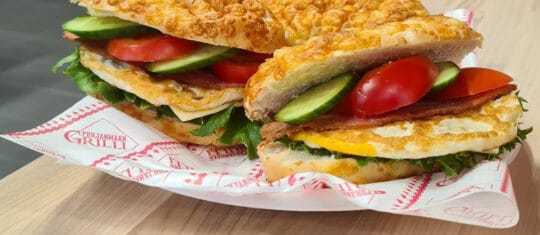
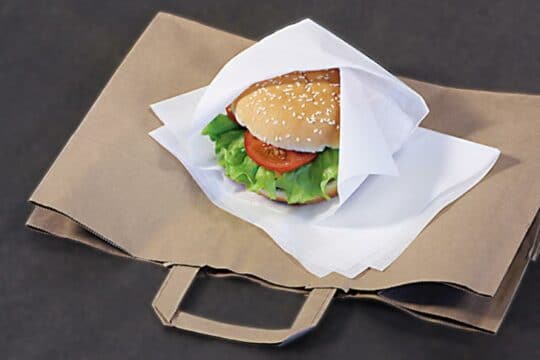
Carccu designs and manufactures paper-based packaging solutions with these factors in mind. Lightweight paper grades used in wraps and liners, for example, can support material efficiency in high-volume applications while still meeting functional requirements like grease resistance and suitability for contact with food.
Importantly, Carccu does not treat all paper packaging as automatically recyclable or environmentally optimal. Instead, the company recognizes that end-of-life outcomes depend on real conditions such as contamination levels and local recycling infrastructure.
FSC® and PEFC: Relevant for fast-food packaging, too
At Carccu®, certified fiber sourcing is a key component of responsible packaging production. FSC® (Forest Stewardship Council®) and PEFC (Program for the Endorsement of Forest Certification) are directly relevant to paper-based fast-food packaging because they address the origin and traceability of the fiber used in paper products.
Carccu holds both FSC® Chain of Custody and PEFC Chain of Custody certifications. This means that:
- Certified paper materials can be traced through the supply chain
- The origin of the fiber is verified according to certification standards
- Material flows are controlled and documented
For fast-food packaging customers, this provides a way to select materials with documented sourcing.
EUDR and its relevance to packaging
Carccu® is EUDR compliant (EU Deforestation Regulation) and closely follows regulatory developments, which raise the requirements for traceability in products derived from forest-based materials.
For paper-based packaging, EUDR highlights the need to:
- Identify the origin of raw materials
- Ensure that materials are not linked to deforestation or forest degradation
- Maintain due diligence in supply chains
Carccu’s Chain of Custody systems support traceability, which is relevant in the context of EUDR requirements. While certification alone doesn’t guarantee compliance, it forms part of a structured approach to documenting material flows.
Material choices in fast-food packaging
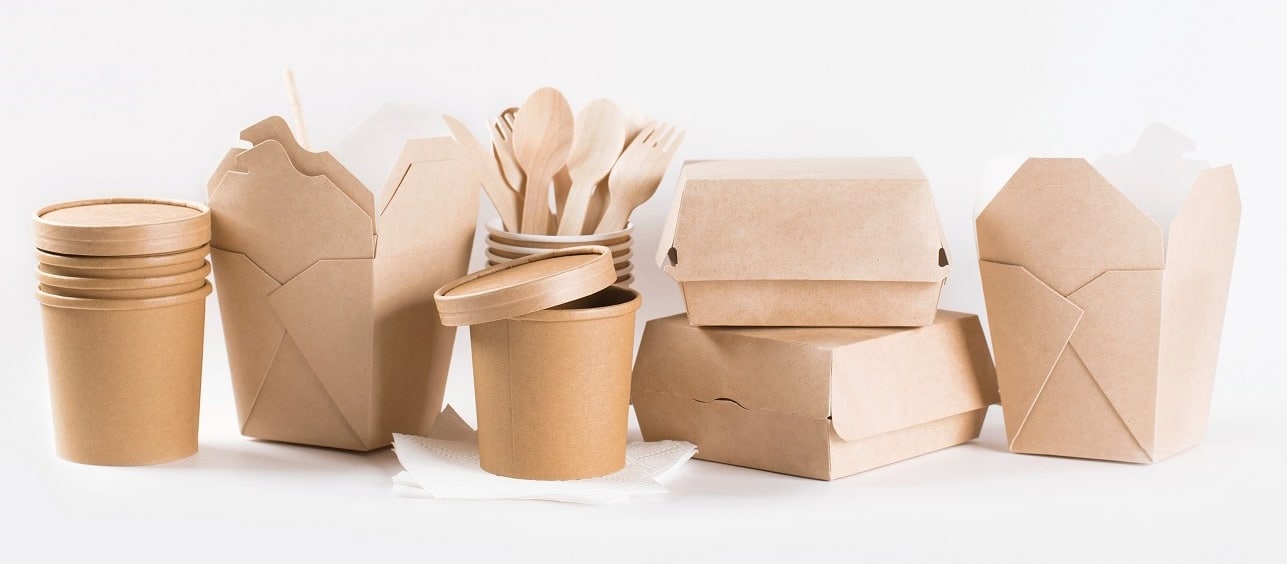
At Carccu®, material selection starts with the functional requirements of the end use. Fast-food packaging must perform reliably in conditions involving heat, grease, and handling. Carccu produces paper-based solutions such as:
From an environmental perspective, Carccu focuses on:
- Using only the amount of material required for the application
- Selecting paper grades that match the respective functional need
- Avoiding unnecessary material combinations
By aligning material properties with real use cases, Carccu® supports efficient packaging solutions that don’t rely on excess material or unnecessary complexity.
Recyclable packaging, compostable packaging, or biodegradable packaging: What’s the difference?
At Carccu®, clear communication about material properties is considered essential. Terms like recyclable, compostable, and biodegradable are often used interchangeably, but they refer to different processes.
Recyclable packaging
Carccu® designs many of its paper-based packaging solutions to be compatible with existing paper recycling systems where conditions allow.
Recyclability depends on:
- Fiber composition
- Coatings or treatments
- Degree of contamination
Carccu recognizes that actual recycling outcomes depend on local infrastructure and user behavior, not only on material design.
Compostable packaging
Carccu® acknowledges that compostable materials require specific conditions, typically those found at industrial facilities.
Whether or not compostable packaging is appropriate depends on the:
- Availability of composting systems
- Local waste-collection practices
Carccu focuses on ensuring that material choices are aligned with real disposal pathways rather than theoretical ones.
Biodegradable packaging
Carccu® treats the term “biodegradable” with caution, as it doesn’t define conditions or timeframes for degradation.
This is why Carccu emphasizes clear and specific material information instead of relying on broad or undefined claims.
Branding in fast-food packaging: Function and value
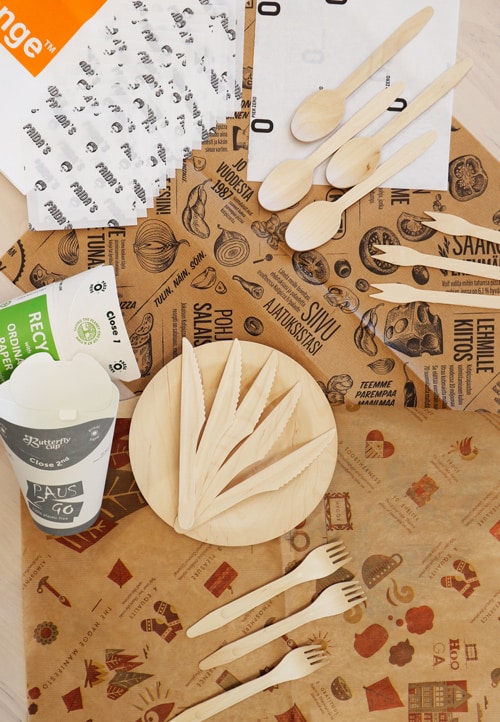 At Carccu®, packaging isn’t just a protective material, but a key branding tool as well. Carccu enables brands to use packaging as a direct communication channel. In takeout and delivery contexts, packaging is often the first tangible interaction between the customer and the brand.
Thanks to flexographic printing, Carccu enables:
- Direct printing on paper packaging
- Integration of logos, patterns, and messaging
- Consistent visual identity across packaging formats
Carccu supports branded packaging solutions that offer:
- Brand visibility
Packagingprinted by Carccu helps customers recognize the brand right away. - Consistency
Carccuenables uniform branding across multiple locations and product lines. - Marketing value
Each package becomes a“surface for communication.” - Perceivedquality
Well-designed packaging produced by Carccu can enhance how the product is experienced. - Differentiation
Carccuhelps brands stand out in competitive fast-food markets. By printing directly onto packaging materials, Carccu avoids the need for additional labels or layers. This supports both functional efficiency and streamlined material use.
Manufacturing considerations
At Carccu®, environmental considerations are integrated into production processes through structured management systems.
Carccu operates according to:
- ISO 9001 (quality management)
- ISO 14001 (environmental management)
These systems support:
- Controlled and consistent production processes
- Identification of environmental aspects
- Continuous improvement
Carccu focuses on process efficiency and responsible material use as part of its manufacturing approach. While no production is impact free, structured management systems provide a framework for ongoing development.
Practical considerations and why Carccu® is the right choice
At Carccu®, more eco-friendly fast-food packaging comes down to informed, practical decisions supported by clear capabilities and verifiable factors.
What sets Carccu apart:
- Specialization in paper-based food packaging, including grease-resistant and baking papers
- FSC® and PEFC Chain of Custody certifications, which enable traceable fiber sourcing
- Flexographic printing expertise, which allows direct branding without additional materials
- Structured environmental and quality management (ISO 14001 and ISO 9001)
- A focus on material efficiency with lightweight and fit-for-purpose solutions
- Supply chain transparency, which supports evolving requirements like EUDR
Together, these factors enable Carccu to offer fast-food packaging solutions that combine functionality, traceability, and efficient material use, which helps businesses make packaging choices based on real, measurable criteria.
Environmental aspects to consider when choosing food packaging materials for restaurants
What is the most environmentally friendly fast-food packaging?
Packaging that prioritizes recyclable and bio-based materials is the most environmentally friendly option for fast food. Smaller environmental impact of the packaging materials contributes to the restaurant industry’s sustainability goals. The ecological impact of fast-food packaging is also influenced by the emissions generated during their manufacturing processes. The carbon dioxide emissions in the production of Carccu® packaging materials is very low.
Does eco-friendly packaging attract customers?
Yes, eco-friendly packaging is increasingly attractive to customers. As consumers seek more responsible alternatives, businesses adopting sustainable practices, including eco-friendly packaging, contribute positively to their brand image and appeal to environmentally conscious consumers. In addition, Carccu®’s packaging materials can easily be tailored to the specific needs of the client with printing in line with their brand.
How can you reduce the environmental impact of food packaging?
You can lessen the ecological effects of food packaging by choosing bio-based and recyclable materials such as paper. Minimizing the use of plastics in fast-food packaging is another way of reducing environmental impact of fast-food packaging—and this is what Carccu® aims at in its production. Additionally, encouraging customers to recycle and opting for minimalistic designs further aids in decreasing overall impact.